
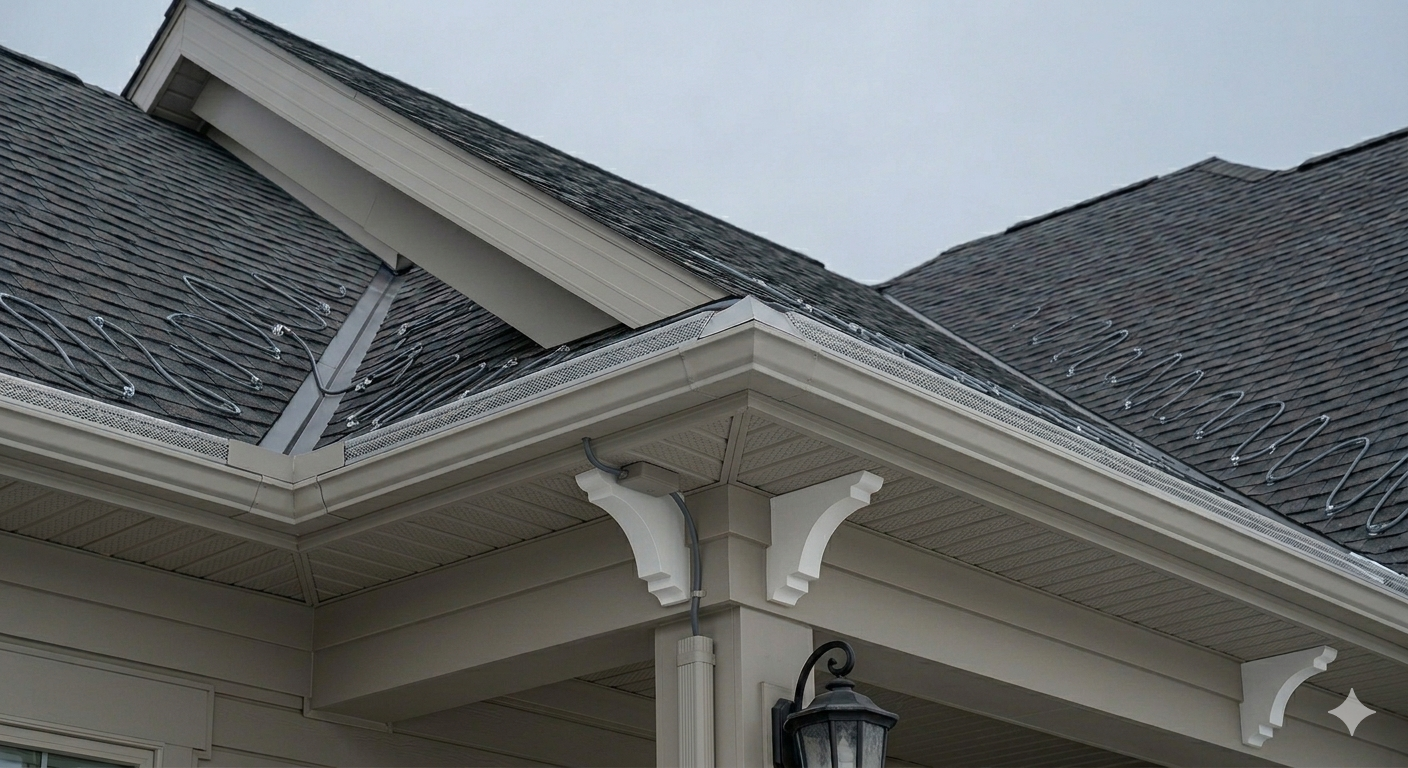
Ice Management Along Roof Edges and Gutters
Heat Cable Installation in Bismarck for properties experiencing ice dam formation or blocked drainage during winter freeze-thaw cycles
Ice accumulation along roof edges and inside gutters creates dams that prevent snowmelt from draining, forcing water under shingles or over gutter edges where it refreezes and adds weight to the system. Heat cables reduce this buildup by maintaining open channels through ice layers, allowing meltwater to reach downspouts even during freezing conditions. Premium Gutter Solutions installs heat cable systems designed to work with your existing gutter infrastructure, routing cables along roof edges and through downspouts where ice blockages most commonly occur during North Dakota winters.
Installation plans are customized based on roof design, gutter configuration, and the areas where ice historically accumulates on your property. Cables are secured to prevent shifting during snow removal and positioned to create melt paths that keep drainage routes functional when temperatures drop below freezing.
Arrange a property consultation to identify ice-prone areas and discuss heat cable placement before winter weather arrives.
What Heat Cables Change During Winter Months
Heat cable installation involves mounting electrical cables along roof edges, inside gutters, and through downspouts where ice typically forms barriers to drainage. Cables are clipped or fastened at intervals to keep them in position, with routing designed to maintain open channels through ice buildup rather than melting all accumulated snow and ice. Power supply is connected through exterior outlets, often with thermostatic controls that activate cables when temperatures reach freezing thresholds.
During winter, you notice that gutters continue draining even when ice forms along roof edges and temperatures remain below freezing for extended periods. Water from snowmelt finds open paths through the heat cable channels instead of backing up behind ice dams or pooling on the roof surface. Downspouts remain clear, allowing drainage to function during thaw periods that would otherwise result in frozen blockages and overflow.
Heat cable systems do not eliminate all ice formation or replace the need for proper attic insulation and ventilation, which address the underlying heat loss that contributes to ice dam development. Cables provide a drainage management tool that reduces the immediate risks of blocked gutters and water intrusion when ice does form despite other preventive measures.
Questions About Heat Cable Systems
Homeowners preparing for winter often ask about cable operation, energy use, and how these systems integrate with existing gutters and roof structures.
How do heat cables prevent ice dams from blocking drainage?
Cables generate enough heat to melt channels through ice buildup, creating pathways for water to flow toward downspouts rather than pooling behind frozen barriers. This reduces the weight and water retention that lead to roof damage or gutter separation.
What areas of the roof and gutter system require heat cables?
Cables are typically installed along roof edges where ice dams form, through gutters where water freezes and blocks flow, and inside downspouts where ice plugs prevent drainage. Placement depends on your roof's exposure to sun and wind, which affects where ice accumulates most heavily.
Do heat cables operate continuously throughout winter?
Most systems include thermostatic controls that activate cables when temperatures drop to freezing and deactivate them during warmer periods, reducing energy consumption compared to constant operation. Manual controls are also available for properties with specific activation preferences.
Can heat cables be added to any existing gutter system?
Yes, cables install alongside current gutters without requiring system replacement, though proper attachment methods must be used to prevent cable damage during snow removal or ice shifting. Installation accounts for gutter material and configuration to ensure secure mounting.
When should heat cable installation be completed before winter?
Installation is best scheduled before snowfall begins, allowing cables to be positioned and tested during conditions that permit safe roofline access. Waiting until ice has already formed complicates installation and delays the protection cables provide during peak ice dam periods.
Premium Gutter Solutions designs heat cable layouts based on roof configuration and winter drainage challenges specific to your property. Request a consultation to review ice-prone areas and plan cable placement that supports safer winter drainage performance.